
When you read the title of this post, did the apology at the beginning create a more positive tone or did it simply just draw you in? My data analysis this week was based on how many times I apologize per day and the motivation behind each one.
I’ve noticed that I was hearing apologies not only from myself but throughout my day from others and wanted to collect some data to determine the reasonings behind this increase. In “The Easiest Word,” Moya Sarner examines the cultural motivations behind this increase in apologizing and the different social groups that are most guilty of over-apologizing. Sarner says:
“It is with good reason that academics from science, history and politics have named ours the Age of Apology.”
(Sarner 1)
The Study
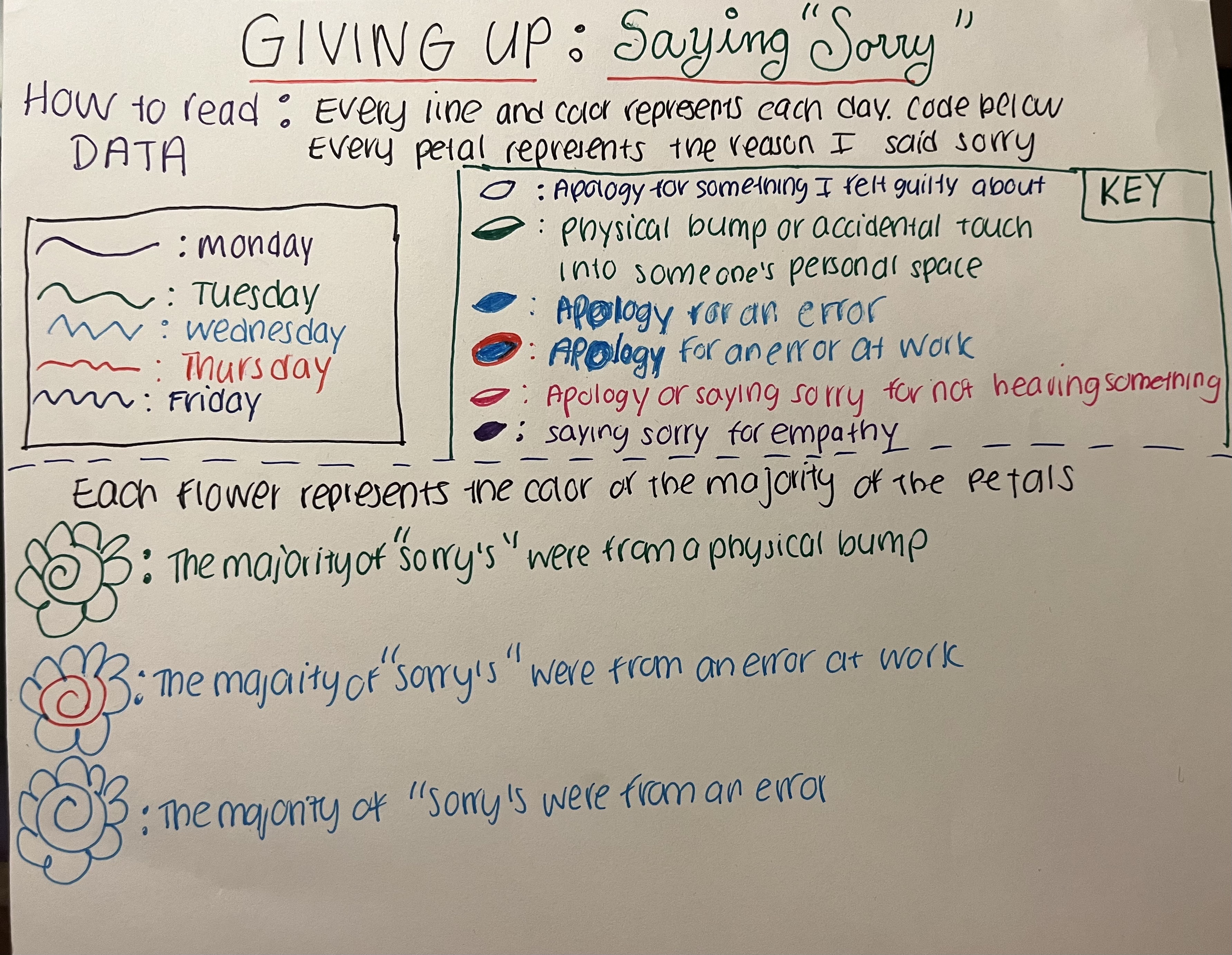
During the past five days, I collected manual data on how many times per day I said sorry and the reason why I said it. It is demonstrated in the below drawing with the handwritten key for each day and the reason for the apology. The stems represent different days of the week. The leaves represent the reasons I apologized. The colors of the flowers at the end represent the majority of each day. For example, if on Monday, the majority of my apologies were for work mistakes, the color would be red.
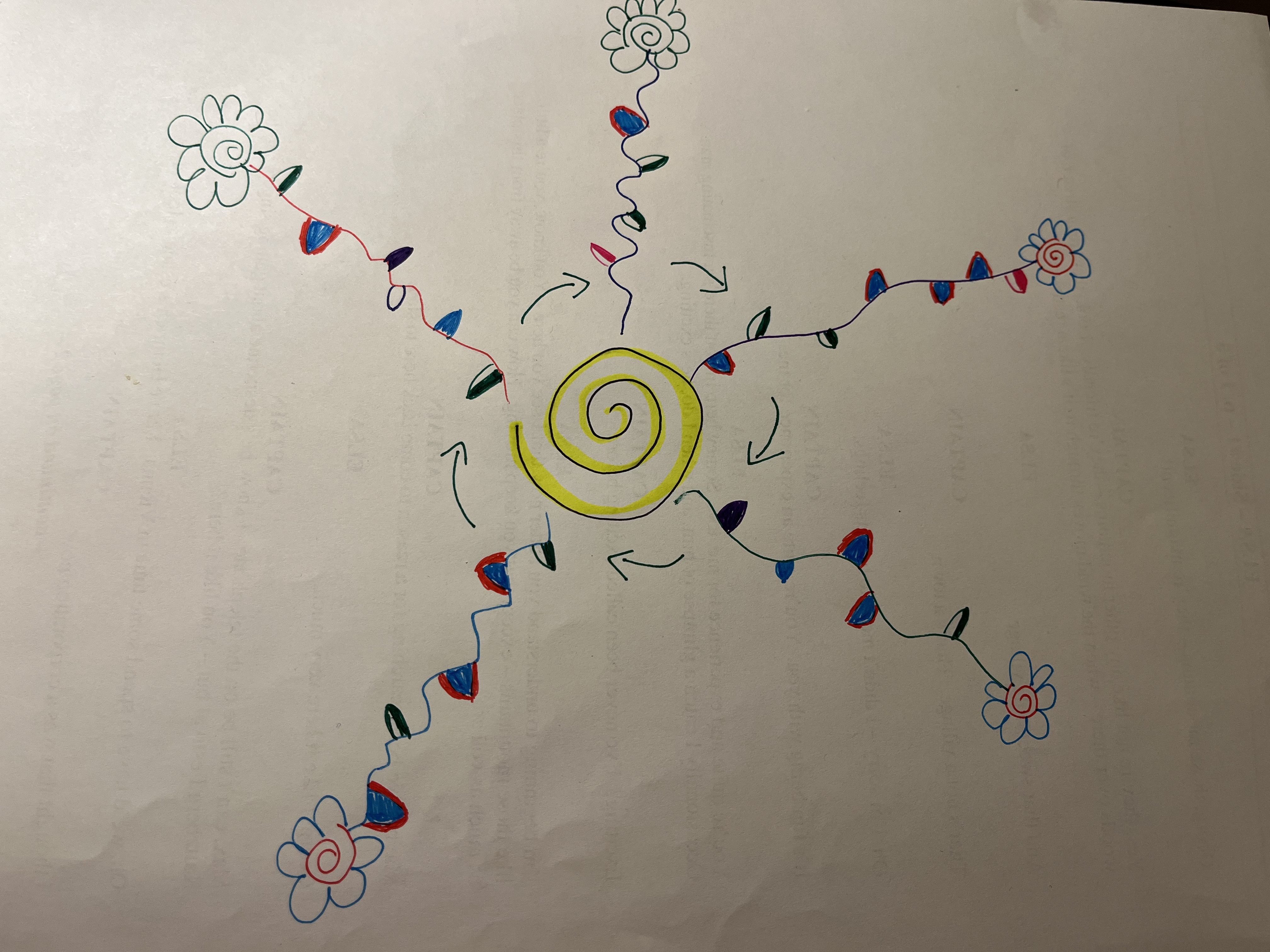
After recording the data, I realized that the majority of my apologies took place at the workplace. There are varying factors that were not kept constant in this study such as the days I worked in the office and the days I worked from home and how that affected the data. In addition, I have also only been at my job for a month so perhaps the number of apologies at work would decrease when I am more confident in my role.
I also wondered if I was apologizing to create a more approachable demeanor at a new job. Sarner says:
“There could even be material benefits to saying sorry; it can make you appear more approachable and trustworthy to strangers, according to work by Alison Wood Brooks at Harvard Business School.”
(Sarner 1)
I could have easily replaced an “I’m sorry” with “thank you for your patience” or “thanks for your feedback, I will work on this.” Moreover, the other recorded reasons for apologizing such as for an accidental physical bump could also be easily substituted by “excuse me” or “pardon.”
A Second Opinion
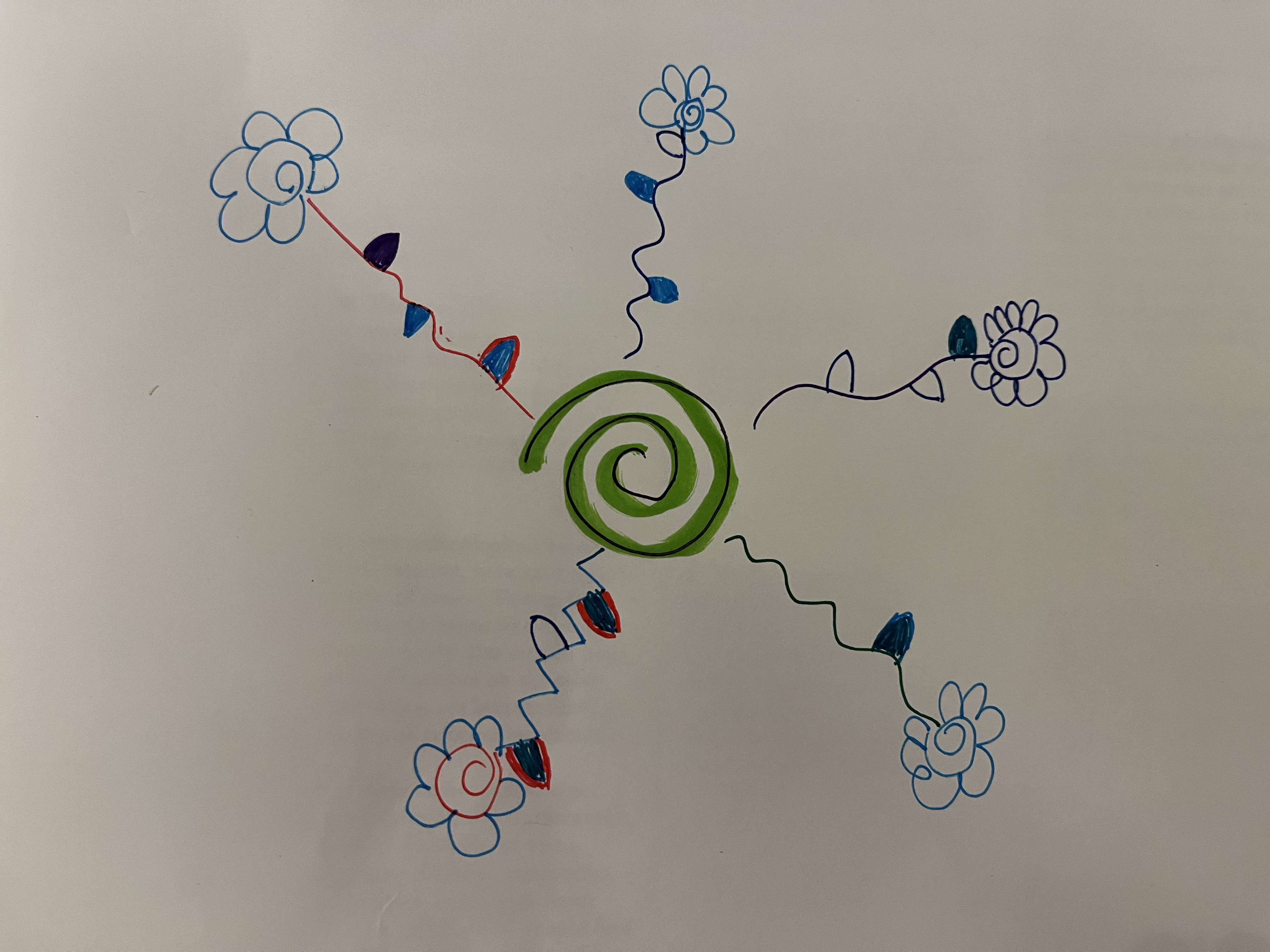
In addition, I also asked my sister to record the amount of times she apologized in a day and her apologies were from a combination of general errors, work errors, and empathy (in order of occurrence). See data below.
I couldn’t help wonder if we both had multiple instances of apologies during our days because we were both women. Sarner says:
“Much of the recent discussion on over-apologising has focused on the idea that women are particularly prone to it. One survey on the problem found that 44 per cent of women thought that women tend to apologise too much, whereas just 5 per cent of them thought this was true of men…The reason women apologised more was because they committed more offences that they felt were deserving of an apology than men did. In fact, both genders were equally likely to apologise when they perceived an offence had been committed, it’s just that women apologised for things that men wouldn’t.”
(Sarner 1)
Next Time
I would like to further perform this study again with additional male participants and compare the data to see if they apologized as many times as women and also compare the amount of times they apologized at work. Conclusively, the cultural and social mores of apologizing in our society make it easy for us to revert to saying “I’m sorry” for many reasons. However, becoming conscious of the amount of times I apologize and finding substitutions will greatly affect how confident I feel and come across to others.
Citations:
Sarner, M. (2017). The easiest word. New Scientist, 234(3130), 38–41. https://doi.org/10.1016/s0262-4079(17)31168-5
 Becca Gottlieb Creative
Leave a comment