
In 2023, 240 million people attended movies and purchased tickets to AMC theaters. This is still below the 356 million people who attended movies in 2019 before the pandemic. (Carollo, 2024). If you were one of the creators of the AMC movie ticket app, you would want to find a way to increase ticket purchases from the app. The first step to finding a solution is specifically defining the problem.
Creating an articulate problem statement helps to articulate the problem so the entire team can understand its dimensions and have a common view of “how users see what they must tackle. From there, all your team will know exactly what to look for and what to avoid” (Interaction Design Foundation, 2020). Helping the entire team see the point of view of the user can be extremely insightful. Business goals and user goals can be very different and defining problems to create solutions finds common ground to satisfy both (Tapia, 2020).
Point of View Statements
One method of creating a clear problem statement is developing a “point of view” (POV) statement. Point of view statements are formatted in a way where they communicate the user’s perspective and “guide you and your team and provide a focus on the specific needs that you have uncovered” (Dam and Siang, 2024).
A “point of view” statement combines the user, need, and insight. The type of user is identified, their specific need and their insight into why this problem is occurring is defined. “You can articulate your POV by inserting your information about your user, the needs and your insights in the following sentence:
[User . . . (descriptive)] needs [need . . . (verb)] because [insight. . . (compelling)]” (Dam and Siang, 2024).
Although this might look like a “Madlibs” exercise, the specificity of its structure will create clear parameters to find specific and actionable solutions. This also helps design teams see problems from the user’s perspective and helps prevent any biases from influencing solutions (Interaction Design Foundation, 2020). “It’s important to define a problem statement to measure how well your solution solves it” (Benjamin, 2016). In other words, having a clear problem statement helps find the most efficient solutions.
Examples
To further articulate how to create a “point of view” statement, this link is a complete exploration of three movie ticket apps and their POV statements. I compared the features and reviews of three ticket selling apps such as Fandango, AMC, and Flickster. Although tangible research with focus groups or interviews are normally used, reviews on the app store are used as user research to identify problems with each app. After reviewing the positive, negative, and suggestive reviews, I was able to create specific POV statements to address specific problems in order to create actionable solutions.
Fandango
The first example I identified was Fandango, which is a popular movie ticket app that features trailers, reviews, and exclusive content in addition to its ticket purchasing ability. One problem identified in the reviews was the lack of customer service when customers needed to return a ticket. An example of a POV statement would be: “Users who return tickets need to have better access to customer service because they are not able to get refunds on the app successfully.”

AMC
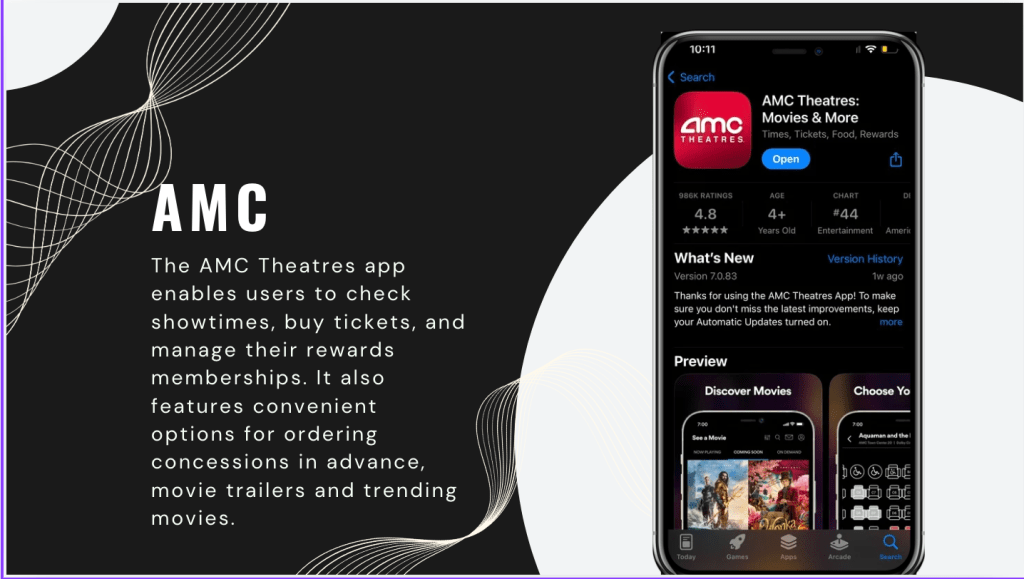
Another example of a movie ticketing app is the AMC app that sells tickets for AMC theaters. The app offers tickets as well as exclusive rewards perks, trailers, and concessions. One common problem new users experienced from the reviews was frequent error messages when using the app. An example of a POV statement for this problem would be: “Users who are new to the app need to have error messages eliminated because they want a smooth experience when trying the new app.”
Flickster
Flickster is a competing movie ticketing app that features movie reviews, the latest movie news, and home viewing options. Recently, there was a new upgrade that changed some of the features from the older version. From the reviews, many long time users said they had loading issues and longed for the customer experience in the previous version. An example of a POV statement would be: “Users who have used the app for years need to have the old layout returned because they are experiencing loading problems with the new update.”

Conclusion
Therefore, if you were one of the creators of the AMC app looking to increase purchases, identifying problems for new users and creating a POV statement is a great place to start. By creating a user-centered statement that encompasses the type of user (new), their need (less error messages), and insight (to create a smooth experience as a new user), a solution can be more easily discovered. The bottom line is that solutions are always more easily found when the creators define the specific problem from the perspective of the user.
Citations:
Benjamin, A. (2016, April 20). Design: How to define the problem. Medium. https://blog.prototypr.io/design-how-to-define-the-problem-5361cccb2fcb
Carollo, L. (2024b, February 29). AMC Theatres: Cinemas’ annual attendance 2023. Statista. https://www.statista.com/statistics/206966/total-attendance-at-amc-theatres
Dam, R. F., & Siang, T. Y. (2024b, September 25). Stage 2 in the design thinking process: Define the problem and interpret the results. The Interaction Design Foundation. https://www.interaction-design.org/literature/article/stage-2-in-the-design-thinking-process-define-the-problem-and-interpret-the-results
Interaction Design Foundation – IxDF. (2020, October 1). What are Problem Statements?. Interaction Design Foundation – IxDF. https://www.interaction-design.org/literature/topics/problem-statements
Tapia, E. (2020, April 22). UX for beginners: Defining the design problem. Studio by UXPin. https://www.uxpin.com/studio/blog/ux-for-beginners-defining-the-design-problem/
 Becca Gottlieb Creative
Leave a comment