
Determining if you product or service is working for the user requires more than one type of user. Even though your product or service may have a specific target audience, getting more specific on each user’s needs is the key to creating a successful product. How do you curate your product or service to apply to users of the same target age group but with different goals and income levels? Using a tool called “personas” is the key to truly designing for the user.
What is a Persona Document?
Looking at a giant spreadsheet of demographic data can be overwhelming and creating personas can be helpful in understanding the motivations behind user behavior. Persona documents include a cluster of users who have similar behavioral patterns in their purchasing decisions and often explores behaviors, attitudes, and motivations that span many demographics (O’Connor, 2011).
Personas help keep the user at the heart of all development. You can’t design for every type of user, but personas help us define who the product is being created for and who not to focus on. In “A Closer Look At Personas: What They Are And How They Work”, Shlomo Goltz says, “For projects with more than one user type, a list of personas will help you to prioritize which users are more important than others” (Goltz, 2014)
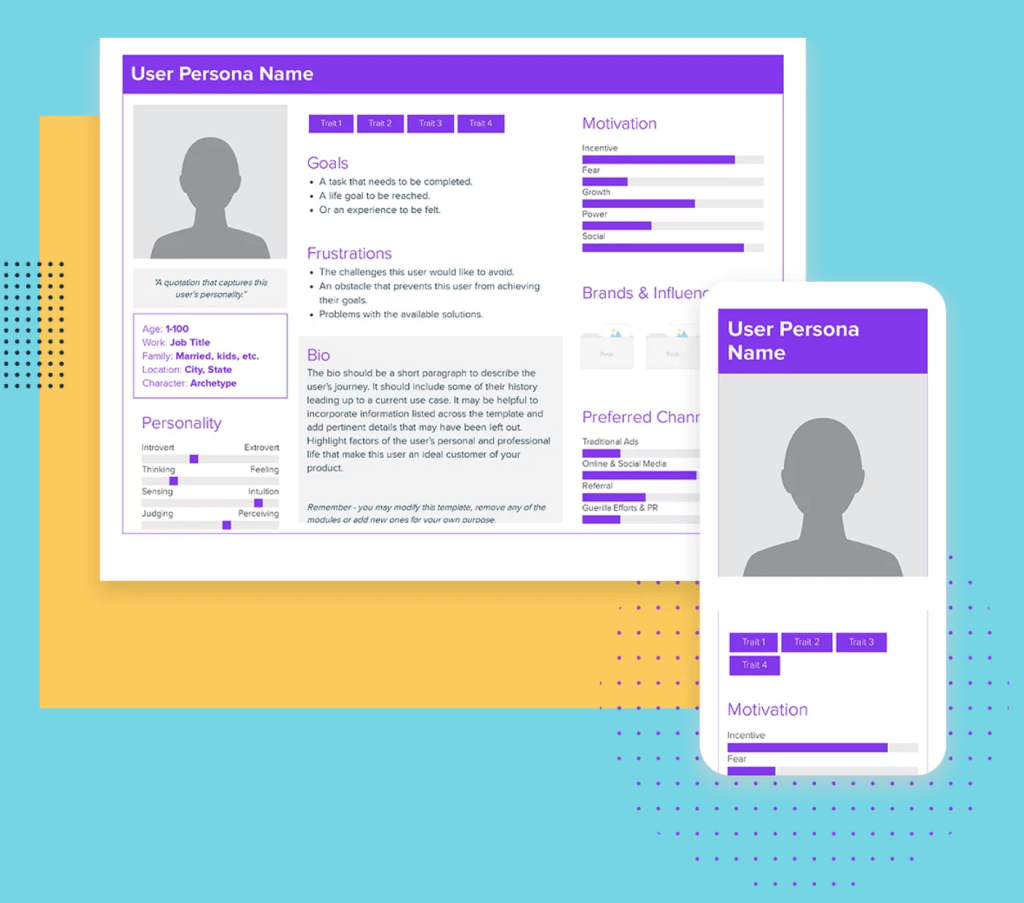
For instance, some research methods might include many user interviews and creating a persona document will combine the majority of users into a few personas that create clearer users for the entire team to learn about. “As the marketplace shifts from a mass manufacturing to a mass customization model, customers needs and desires are more accurately identified through the development of personas rather than through demographic data” (O’Connor, 2011). In addition, persona documents explore the “why” to define “why customers do the things they do and what they expect from an organization within any given context” (O’Connor, 2011).
Playbill.com Example
An example of a persona document can be found at this link for the website, www.Playbill.com. Because Playbill.com is a website that houses so much information, a persona document would be helpful in giving the creators some insight to the different types of users, which pages they visit, and why they behave in certain ways. For example, Playbill.com might have tourists that visit the site to purchase tickets and learn about Broadway shows; however, it also might have an audience of experienced theatergoers looking for the latest industry news before they purchase tickets to the latest shows.
Although Kevin O’Connor in “Personas: The Foundation of a Great User Experience” recommends “recruiting five to seven respondents per persona to see patterns of behavior,” the persona document linked here identifies two types of personas that emcompass combined data on two common types of frequent website visitors.
Persona 1 – The Professional Actor
The first persona described is Becca, who represents a few different theatre professionals that frequently visit Playbill.com. Becca is a NYC local and a professional actor. She visits Playbill.com frequently to view the latest news and browse the latest job postings. However, she does not often purchase tickets on Playbill.com

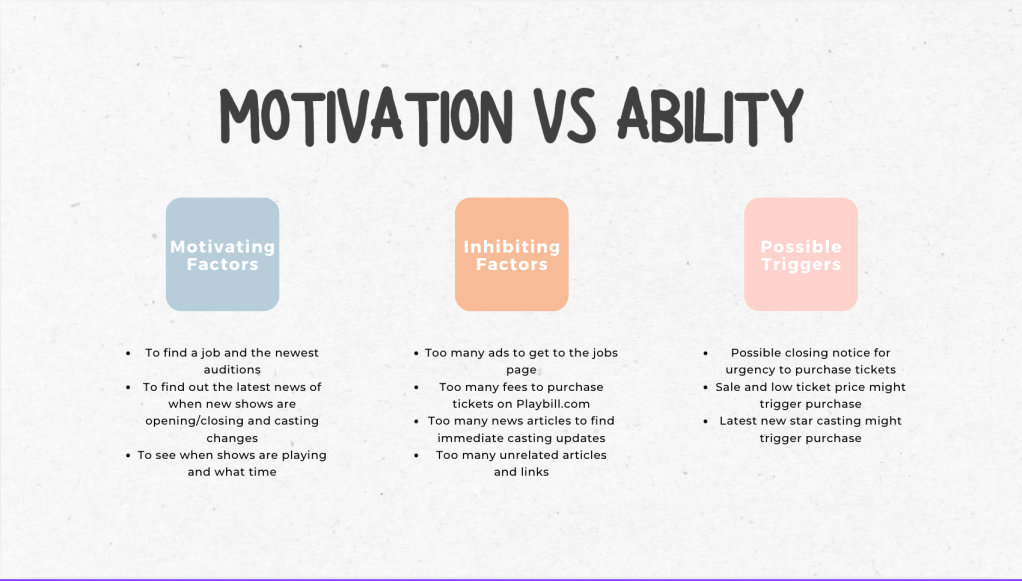
Upon further exploration into the motivation and inhibiting factors behind Becca’s non-conversion behaviors, some valuable information was uncovered that could benefit the website’s creators. She visits the site for job information and is constantly disrupted by the ads that prevent her from clicking further into a ticketing journey. She also is an “insider” to the industry and knows Playbill.com is not the best deal on ticket prices.
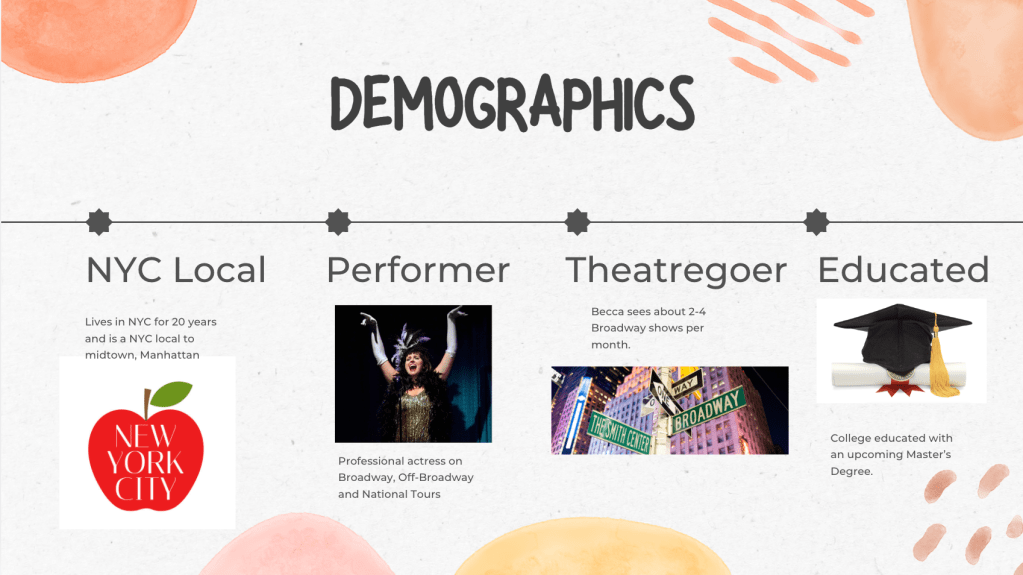
Therefore, highlighting more sales and new deals might make Becca convert since she is aware of the competing ticket sellers on the market. Creating a more direct button to the jobs page could create a more streamlined approach without ads that might keep her on the site for longer to browse for tickets.
Persona 2 – The Tourist
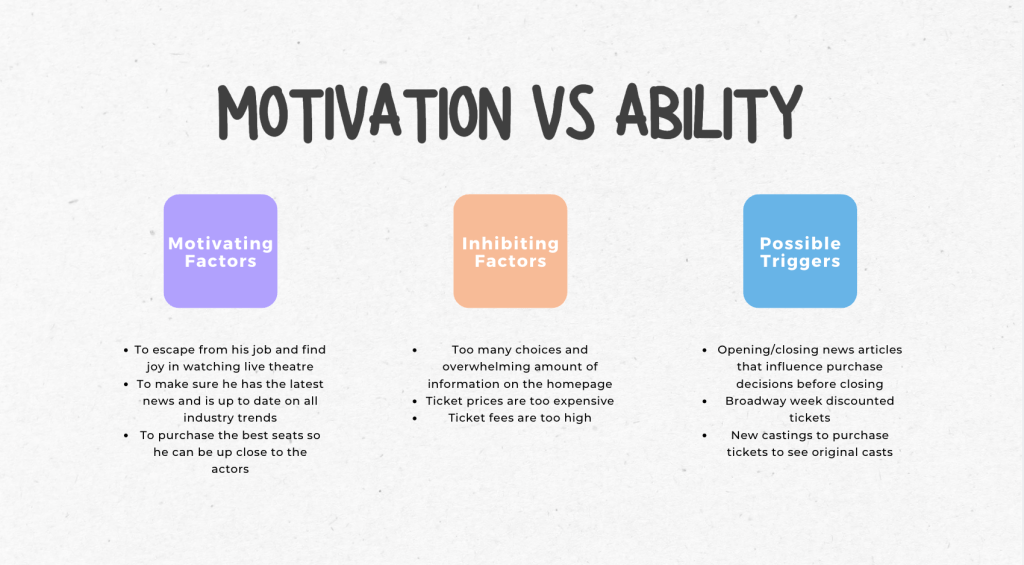
The second persona is Justin, who is an avid theatre fan and tourist who visits NYC 3 times a year to see the newest Broadway shows. He represents domestic tourists who are knowledgable theatergoers that visit NYC to see Broadway shows. He visits Playbill.com to see the latest news, to shop for Broadway merchandise, and to purchase tickets.
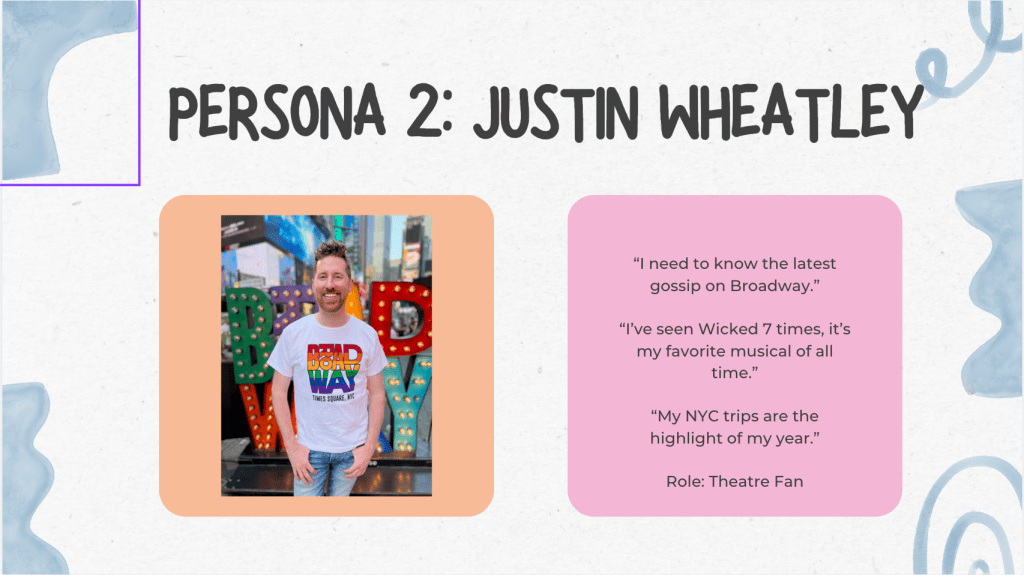

He is much more likely to purchase tickets on Playbill.com than Becca because he has a limited travel window to see the desired shows and browses the site for longer periods of time reading editorial articles. However, he does not have unlimited expendable income and would also be motivated by deals and specials if the seats were close to the stage.
Conclusion
Although a new deal on ticket price would motivate both Becca and Justin to purchase a ticket, their behaviors and needs are very different when they visit Playbill.com. For example, Becca has limited time to visit the site and is looking for schedules and jobs quickly, whereas Justin has more time to read editorial articles and browse merchandise for leisure. The Playbill.com creators should be examining the user journeys to get to webpages quickly for some users but also have a way to display many articles for users with more time to browse.
In addition, both users are knowledgable theatergoers so the information must be up to date, accurate, and captivating for an audience member with an understanding of the industry. There are also more users with little knowledge of the industry who also visit the site and are not noted here that should also be explored to make sure they are getting clear information. In terms of conversion to purchasing tickets, both Becca and Justin would be motivated by new casting changes or closing notices as well as sales on ticket deals.
The information found by delving further into many different personas is invaluable to the creators. For instance, Playbill.com would have never known that their ads are getting in the way of ticket purchases without persona documents. With persona documents, the creators would have also discovered that adding a banner with a new ticket deal or sale would trigger users to visit the ticketing page when they wouldn’t normally visit. One last tip to keep in mind is:
In order to keep personas current, companies should maintain a consistent dialogue with customers and commit to maintaining the personas as living and breathing documents (O’Connor, 2011)
In other words, although these personas are insightful today, users’ motivations and behaviors might change over time depending on the economy, job status, Broadway industry news, or financial changes. It is important to develop personas in great detail to understand different users goals and also continue to research them for updated behavioral and motivation changes as time goes on.
Citations:
Cakir, A., & Alper Cakir is the founder and CEO of Xtensio. (2024, July 8). How To Create A User Persona (With Template and Examples). Xtensio. https://xtensio.com/how-to-create-a-persona/
Goltz, S., (2014, August 6). A closer look at personas: What they are and how they work: 1. Smashing Magazine. https://www.smashingmagazine.com/2014/08/a-closer-look-at-personas-part-1/
O’Connor, K. (2021, April 20). Personas: The foundation of a great user experience. UX Magazine. https://uxmag.com/articles/personas-the-foundation-of-a-great-user-experience
Ralph, B. L. (2022, September 29). Creating personas. Medium. https://medium.com/@benleralph/personas-74c4e1c12ee2
 Becca Gottlieb Creative
Leave a comment